Real-time execution for real-world systems
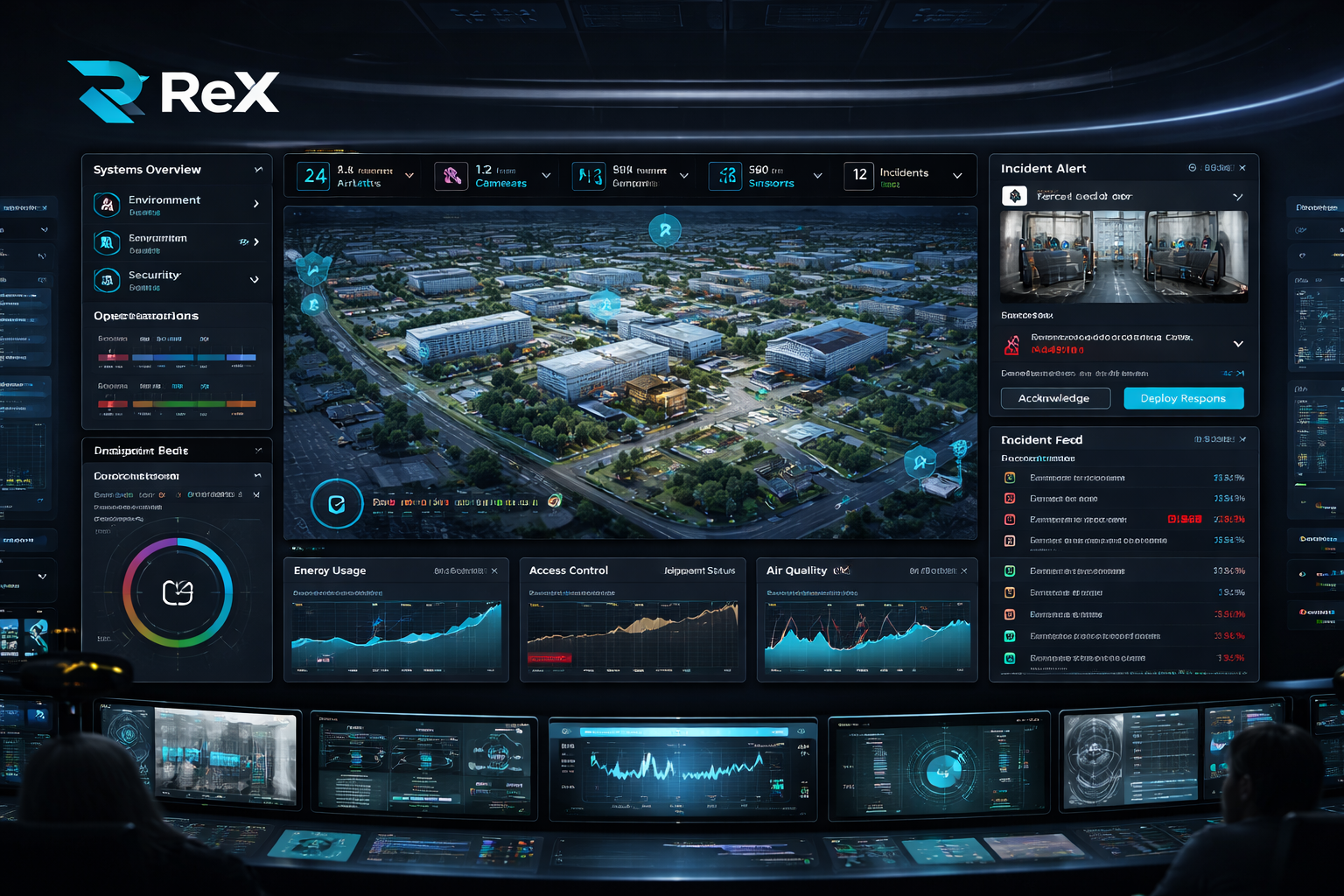
ReX connects signals, systems, and environments into a single operational layer—enabling organisations to see clearly, respond confidently, and operate as one.
Platform
A layered architecture that moves from signals to execution—designed for progressive deployment.
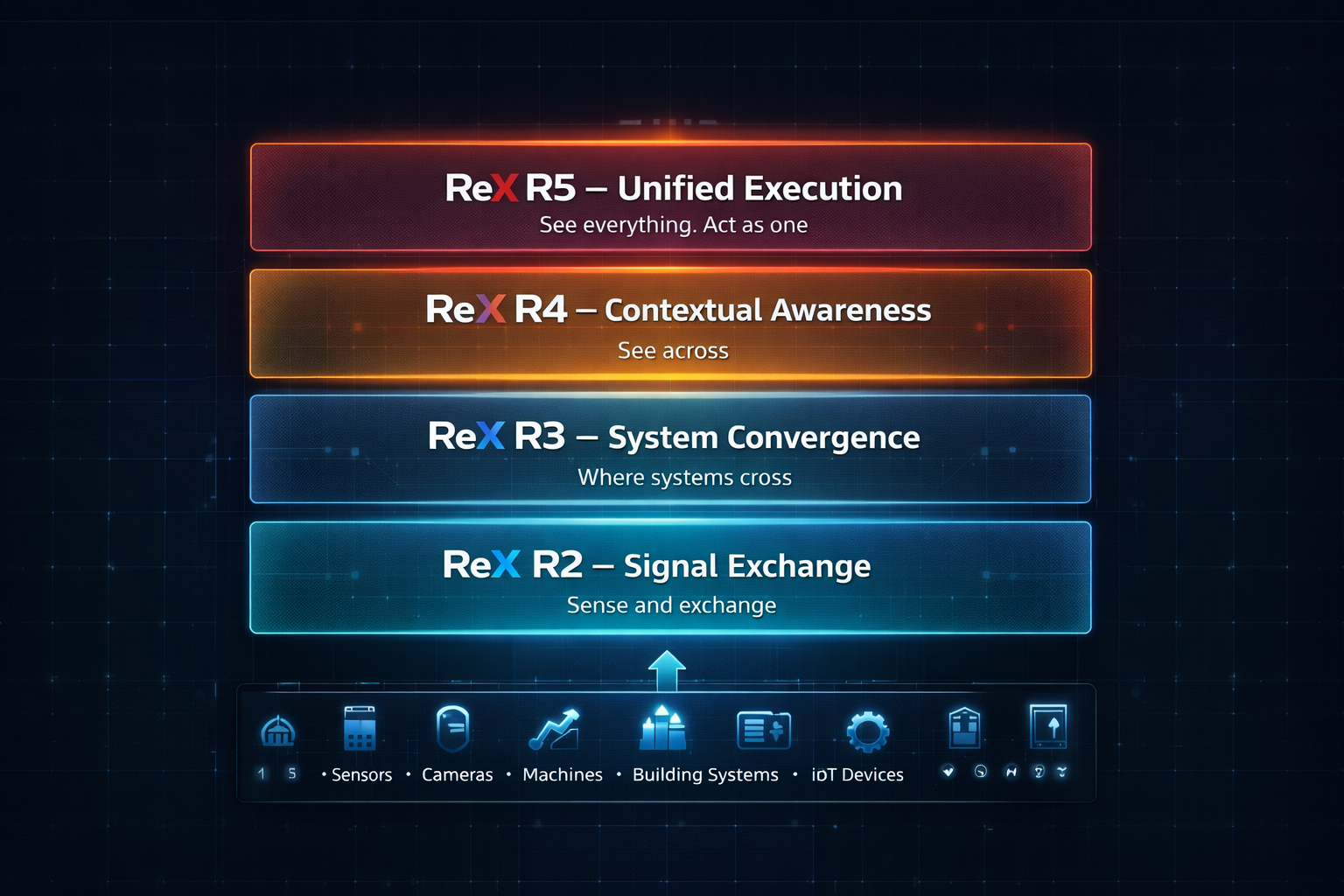
ReX is structured as a system-of-systems platform. Each layer builds on the previous one, allowing organisations to start small and expand without re-architecture.
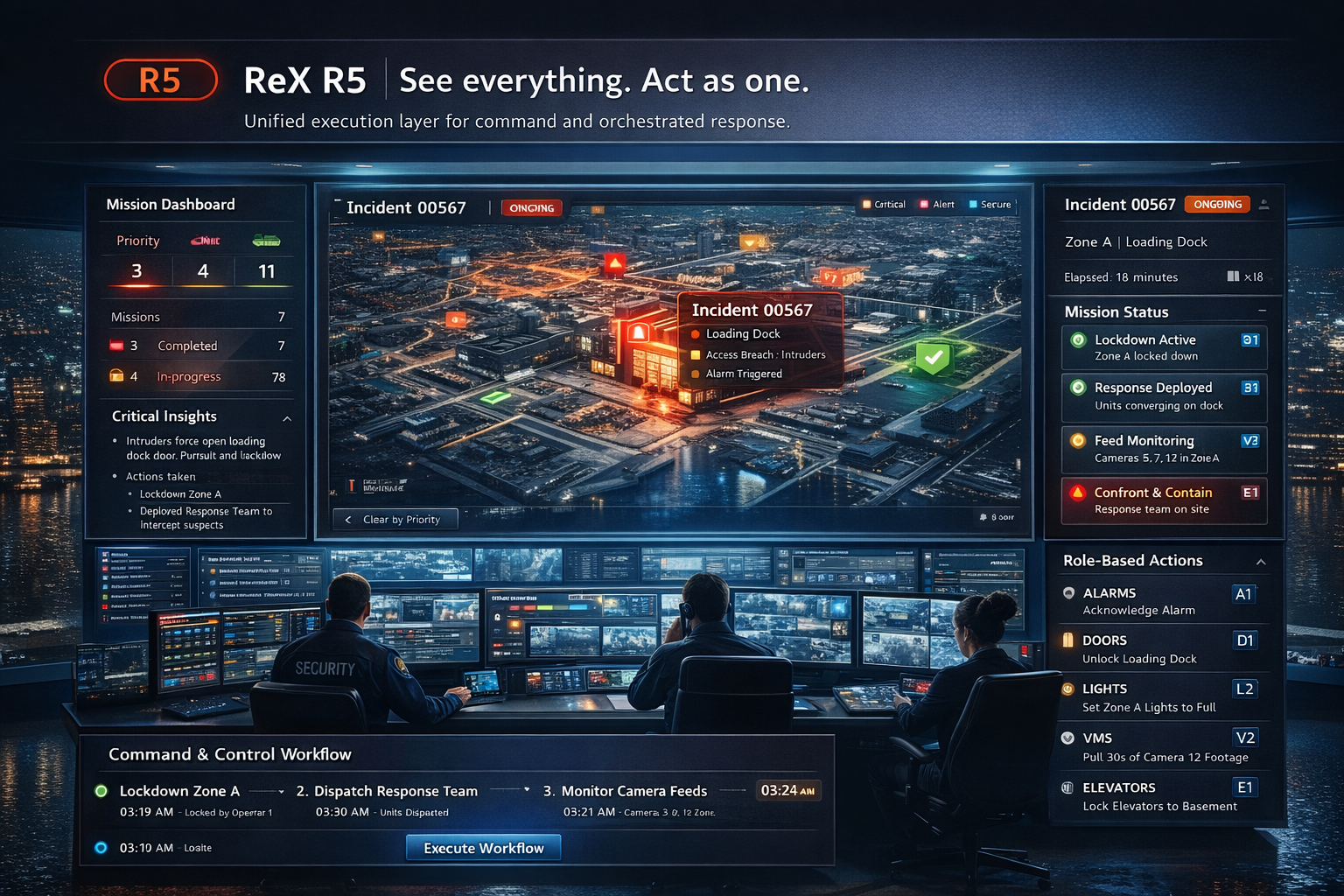
ReX R5 — Unified Execution
See everything. Act as one. Orchestrated responses, command dashboards, and governed execution.
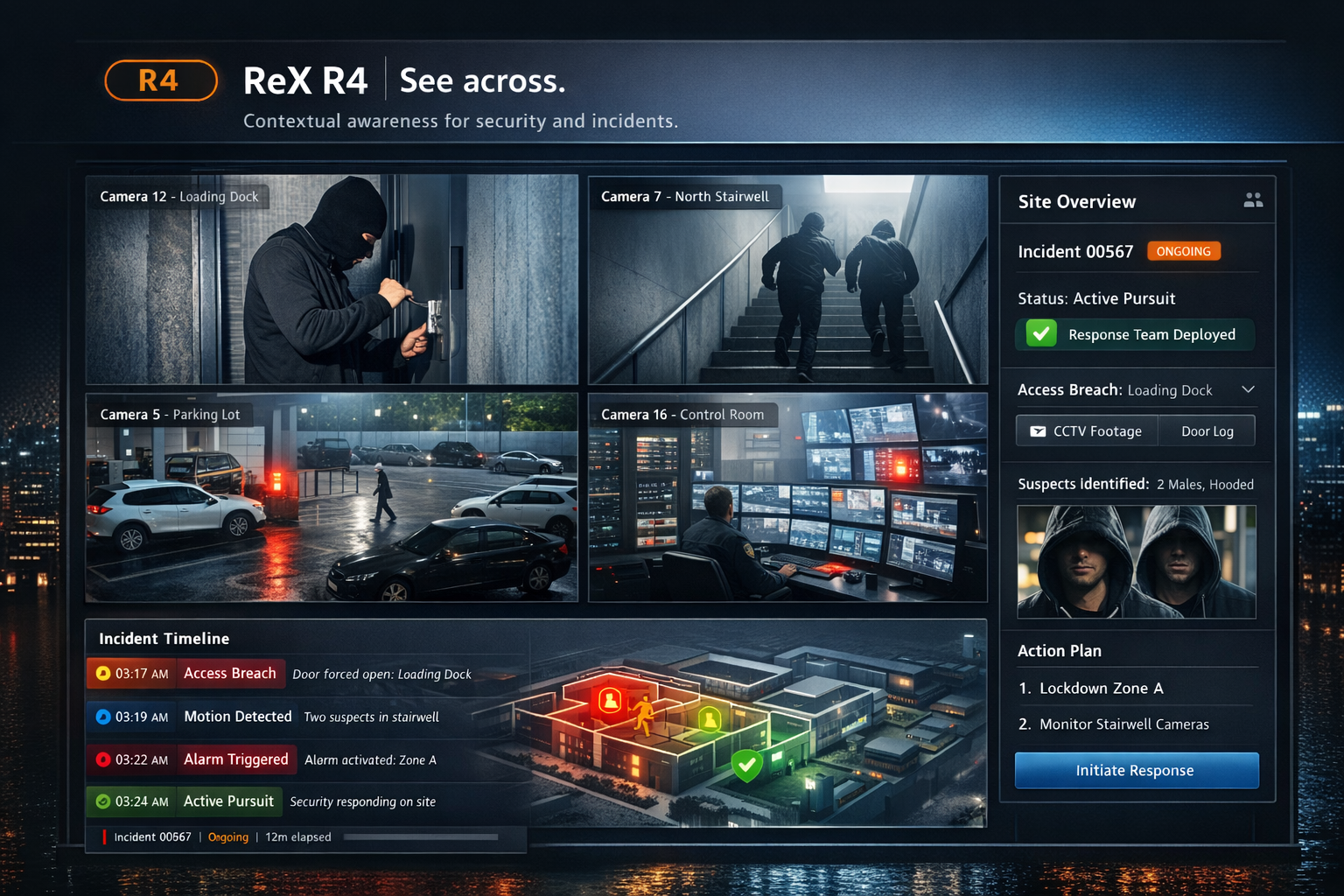
ReX R4 — Contextual Awareness
See across. Correlate events across zones, devices, and environments for situational awareness.
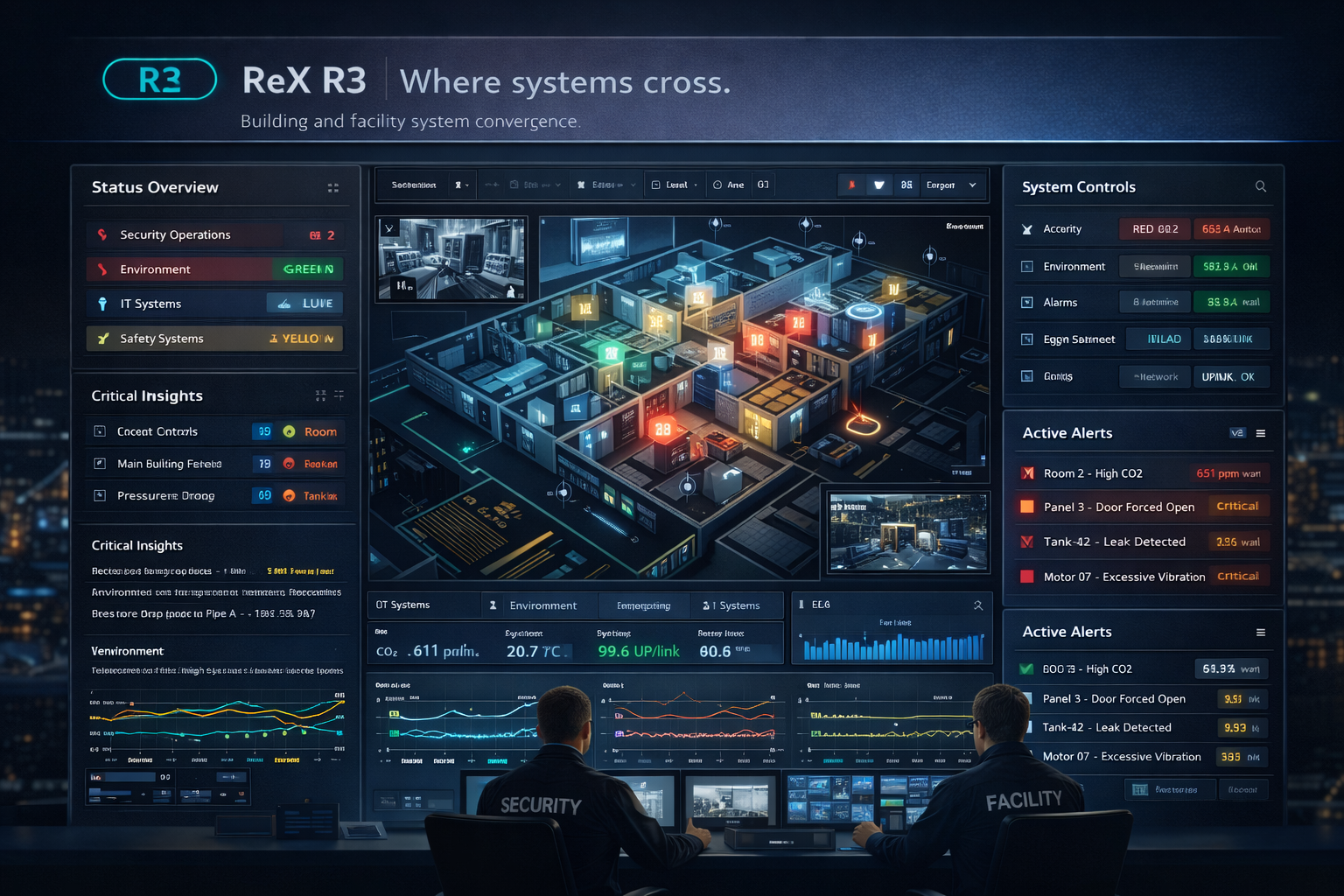
ReX R3 — System Convergence
Where systems cross. Unify building and facility subsystems into an operational view.
ReX R2 — Signal Exchange
Sense and exchange. Ingest and normalise signals from sensors, machines, and connected devices.
Physical World / Devices
Sensors • Machines • Cameras • Building systems • Controllers
Not a replacement
ReX sits above existing systems to unify operational visibility and execution without disruption.
Progressive adoption
Start with signals or systems. Expand to context and execution when required.
Governed execution
Clear roles, confirmations, and auditability for actions in critical environments.
Models (R2–R5)
Choose the operational depth you need today. Expand when your environment is ready.
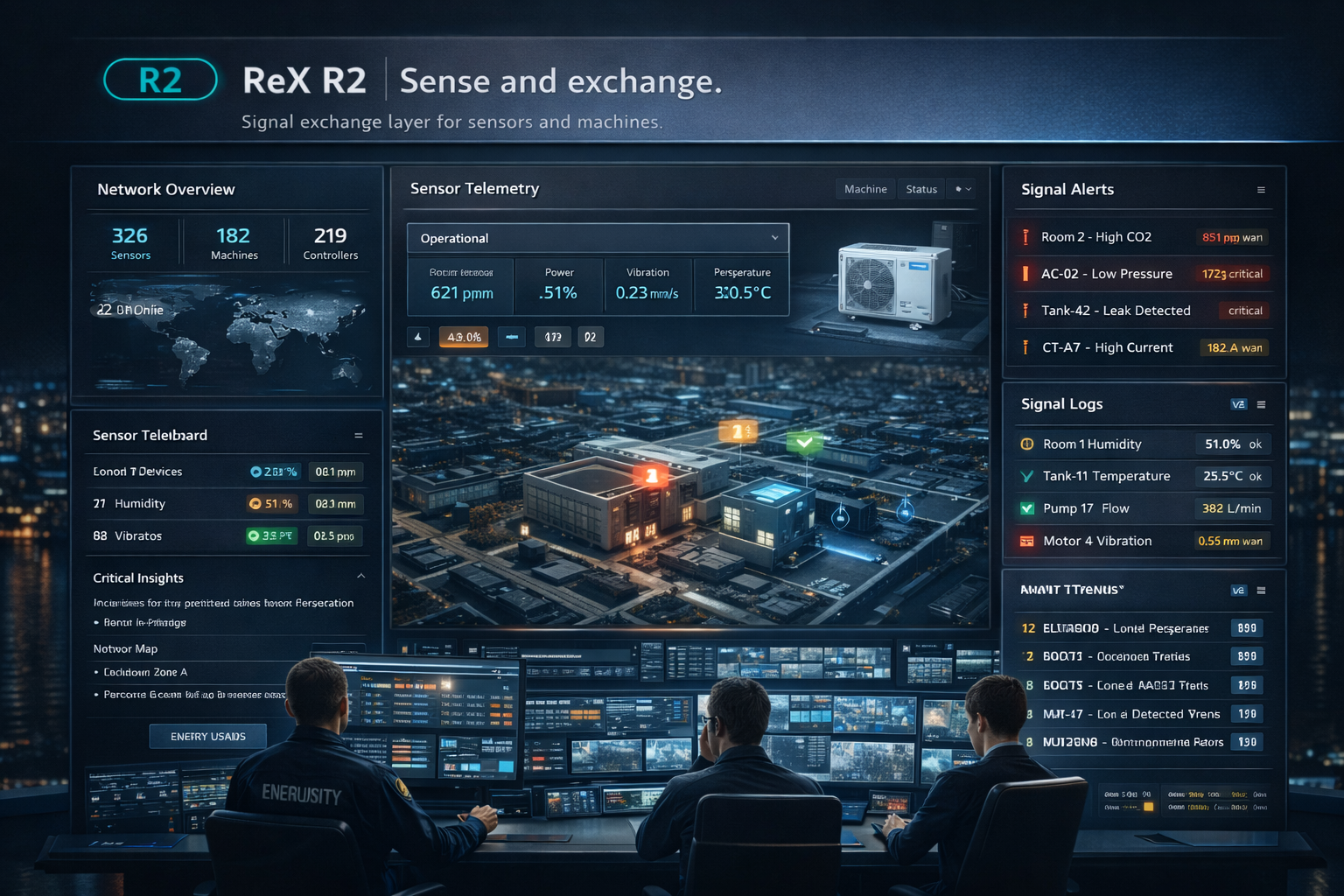
ReX R2
Sense and exchange. Signal exchange layer for sensors and machines.
ReX R3
Where systems cross. Building and facility system convergence.
ReX R4
See across. Contextual awareness for security and incidents.
ReX R5
See everything. Act as one. Unified execution layer for command and orchestrated response.
R5 is where visibility becomes coordinated action. Actions are governed through roles, confirmations, and auditability.
Note: ReX models can be enhanced with optional intelligence assistance (iR series).
Intelligence-assisted (iR Series)
Optional capabilities that support operators with insights and recommendations.
ReX iR2–iR5
The “i” designation indicates intelligence-assisted capabilities that support human operators.
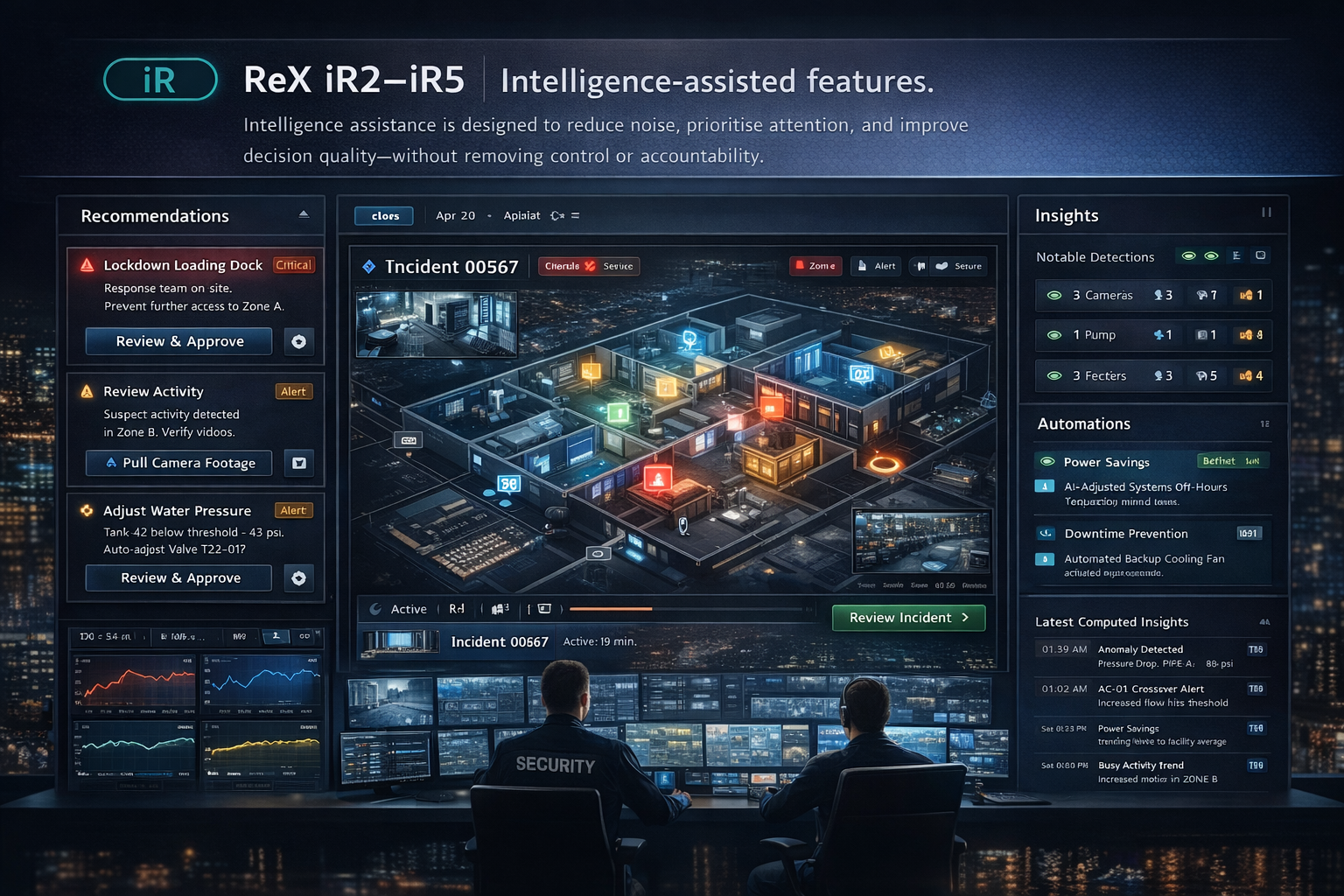
Intelligence assistance is designed to reduce noise, prioritise attention, and improve decision quality—without removing control or accountability.
iR capabilities by layer
AI-assisted signal analysis
Pattern and anomaly support for sensor and machine signals.
AI-supported system insights
System behaviour insights for facilities and operational subsystems.
AI-assisted situational awareness
Context correlation assistance across zones, devices, and incidents.
AI-assisted execution support
Recommendations and prioritisation to support governed execution.
Human-in-the-loop control remains mandatory. Intelligence-assisted functions are configurable based on organisational policy and data governance requirements.
Industries
ReX supports diverse environments by unifying operational visibility and execution.
Buildings & Campuses
Coordinate facility systems and environments through a unified operational view.
Industrial & Manufacturing
Operational visibility around machines and lines without interfering with control logic.
Enterprise & Government
Governance-ready, modular, and audit-friendly execution for critical operations.
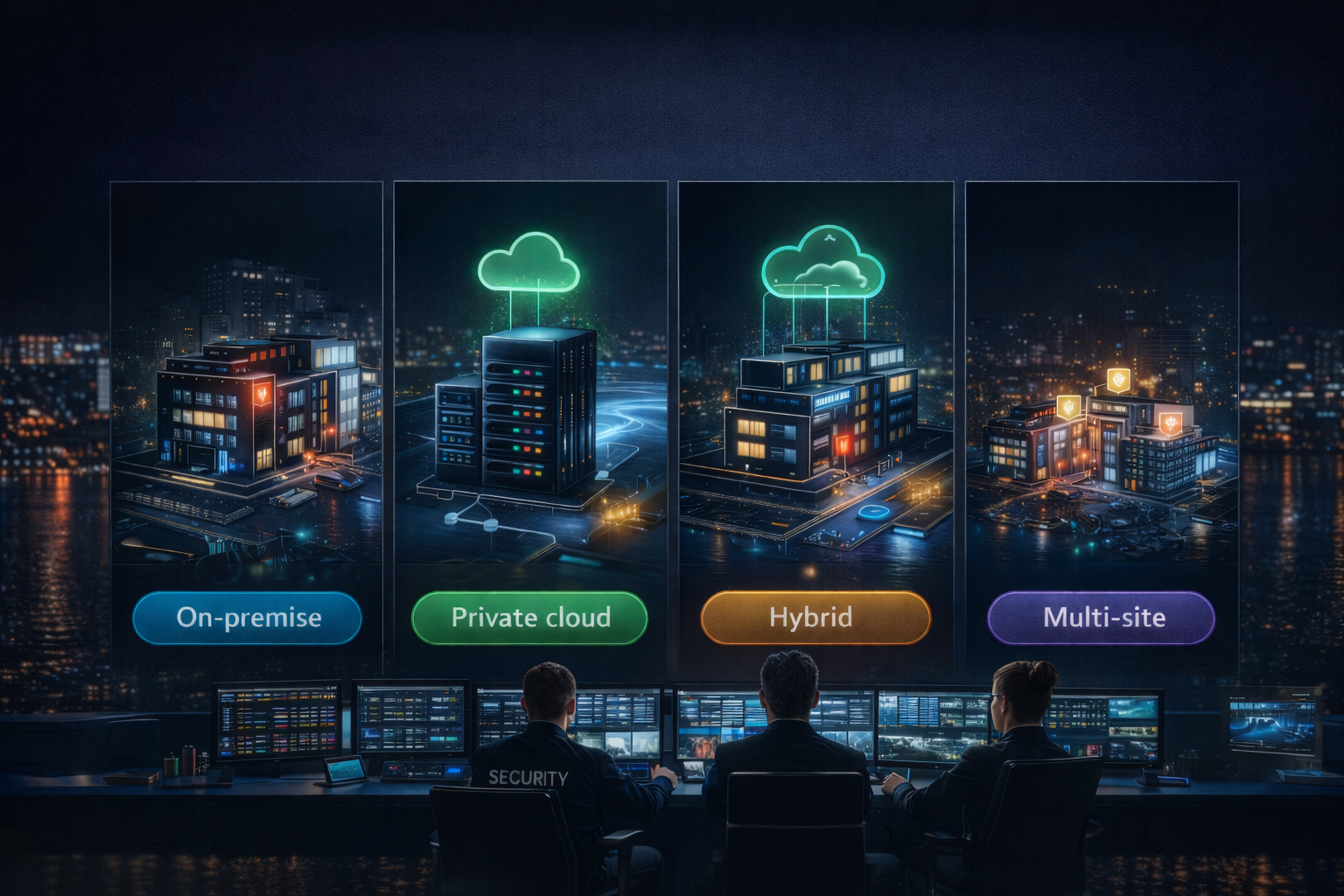
Deploy today. Expand tomorrow.
Start at the layer that matches your current maturity—signals, systems, context, or execution—and expand progressively. Optional intelligence-assisted capabilities can be enabled when policies and operations are ready.
Contact
Request a demo or discuss deployment options for your environment.
Request a Demo
A member of our sales team will contact you to discuss your operational requirements and suitable ReX deployment options.
Intelligence-assisted capabilities (iR series) are optional and configurable based on organisational policies and data governance requirements.
Talk to an Expert
Discuss tier selection (R2–R5), integration approach, and optional intelligence assistance (iR).
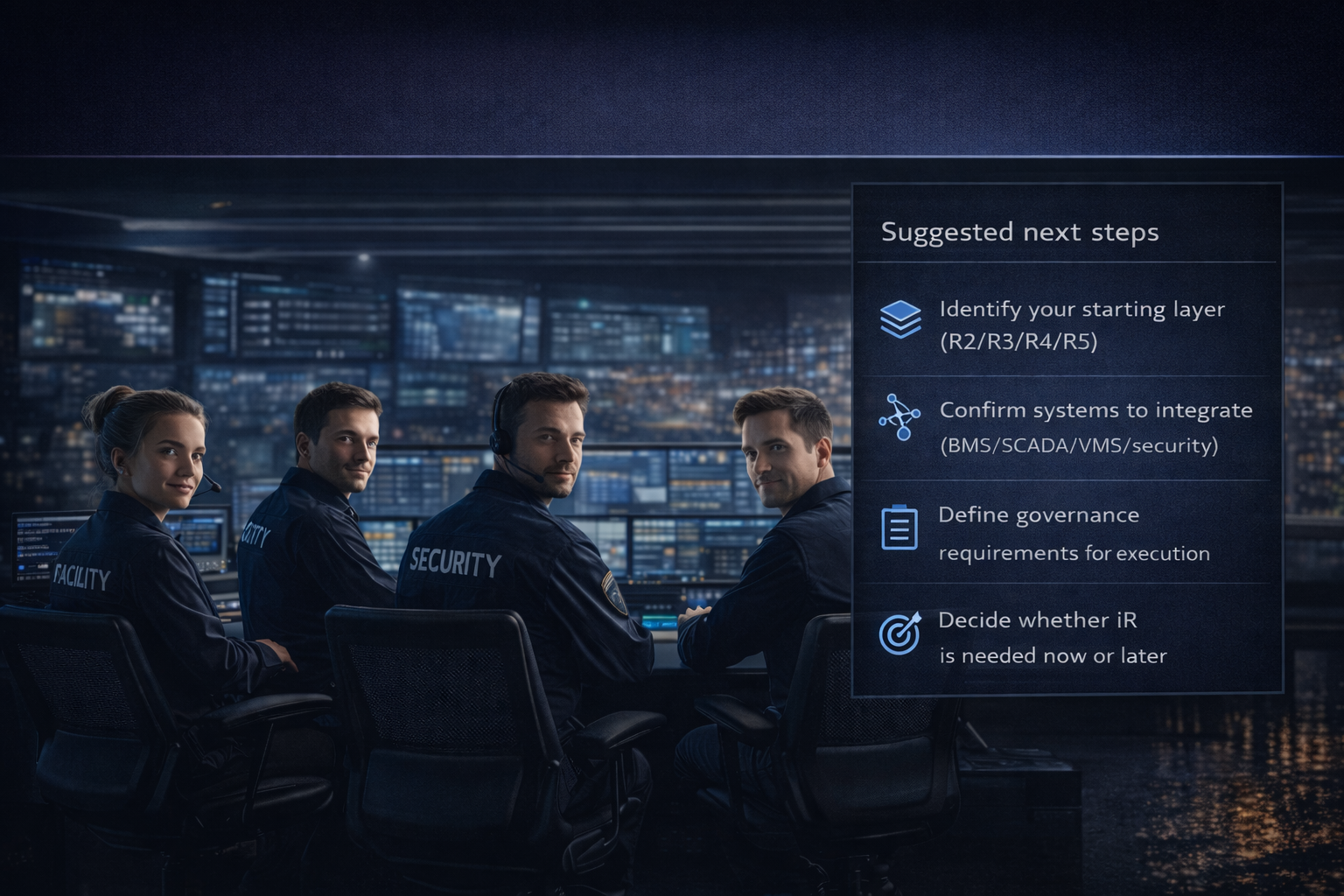
Suggested next steps
1) Identify your starting layer (R2/R3/R4/R5)
2) Confirm systems to integrate (BMS/SCADA/VMS/security)
3) Define governance requirements for execution
4) Decide whether iR is needed now or later